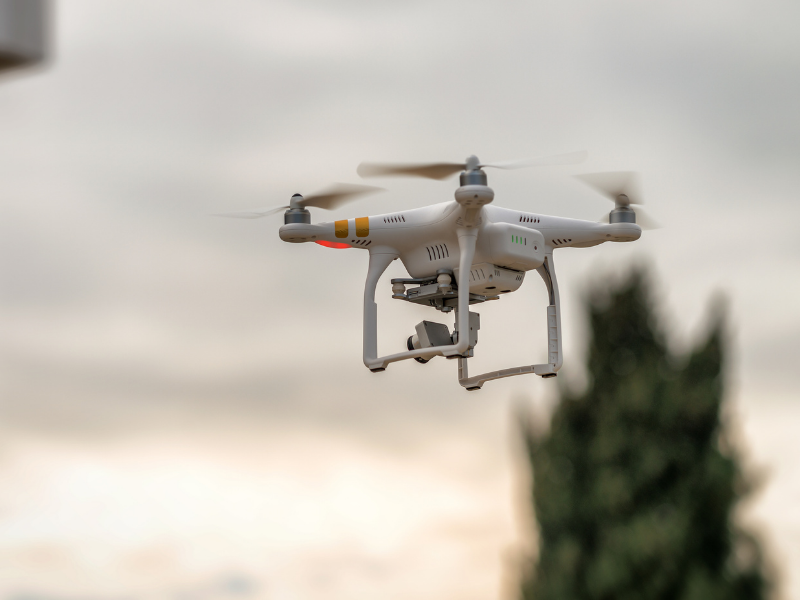
Drone Roof Surveys in Hastings and Across Sussex

A safe and practical way to inspect roofs, chimneys, guttering and other difficult-to-reach areas for signs of damage and water ingress

Drone flying during an aerial property inspection

Drone Roof Surveys in Hastings and Across Sussex

A safe and practical way to inspect roofs, chimneys, guttering and other difficult-to-reach areas for signs of damage and water ingress

Drone Roof Surveys in Hastings and Across Sussex

A safe and practical way to inspect roofs, chimneys, guttering and other difficult-to-reach areas for signs of damage and water ingress

Drone Roof Surveys in Hastings and Across Sussex2026-09-03T14:17:07+01:00

What Is a Drone Roof Survey?

Drone roof surveys in Hastings and across Sussex provide a practical way to inspect roofs, chimneys, guttering and other high-level areas that cannot be viewed clearly from the ground. Detailed aerial photographs and video may reveal cracked or slipped tiles, defective flashing, blocked guttering, deteriorated chimney masonry and faults around roof junctions.

A drone survey can support an investigation into penetrating damp or rainwater ingress without immediately relying on ladders, scaffolding or other access equipment. It is a visual inspection, so the external findings should be considered alongside internal staining, moisture patterns and any other evidence inside the property.

Damp Doctor Sussex reviews the imagery, explains any visible defects and recommends the most appropriate next step. Further access or opening-up may still be required where a defect needs closer physical inspection or repair.

  • Suitable For

Homeowners, landlords, letting agents, property managers, homebuyers and property professionals concerned about high-level building defects or possible water ingress.

  • Property Types

Houses, flats, residential blocks, commercial properties, older buildings and properties with roofs or elevations that are difficult to inspect safely from ground level.

  • Areas Inspected

Roof coverings, chimneys, lead flashing, guttering, valleys, roof junctions, parapets, external walls and other accessible high-level areas.

  • Suitable For

Homeowners, landlords, letting agents, property managers, homebuyers and property professionals concerned about high-level building defects or possible water ingress.

  • Property Types

Houses, flats, residential blocks, commercial properties, older buildings and properties with roofs or elevations that are difficult to inspect safely from ground level.

  • Areas Inspected

Roof coverings, chimneys, lead flashing, guttering, valleys, roof junctions, parapets, external walls and other accessible high-level areas.

When Can a Drone Survey Help?

Damp patches appearing on upstairs walls or ceilings.

Water staining that becomes worse during or after heavy rain.

Suspected slipped, cracked or missing roof tiles.

Possible problems around a chimney stack or lead flashing.

What Happens During a Drone Survey?

The survey process may vary depending on the property, location, weather and reason for the inspection.

Initial Discussion

Tell us what you have noticed, where the damp or water staining is appearing and when the problem occurs.

Property and Site Check

We assess the property, surrounding area and weather conditions to confirm that the drone can be operated safely and appropriately.

Drone Inspection

The drone is used to capture detailed images or video of the relevant roof, chimney, guttering or high-level building areas.

Review of the Evidence and Recommendations

The aerial imagery is reviewed alongside the internal symptoms and any other inspection findings. We explain any visible defects identified and recommend the most suitable next step. Where appropriate, the drone findings can be compared with moisture mapping, thermal imaging or internal moisture readings to assess whether an external defect aligns with the pattern inside the property.

Initial Discussion

Tell us what you have noticed, where the damp or water staining is appearing and when the problem occurs.

Property and Site Check

We assess the property, surrounding area and weather conditions to confirm that the drone can be operated safely and appropriately.

Drone Inspection

The drone is used to capture detailed images or video of the relevant roof, chimney, guttering or high-level building areas.

Review of the Evidence and Recommendations

The aerial imagery is reviewed alongside the internal symptoms and any other inspection findings. We explain any visible defects identified and recommend the most suitable next step. Where appropriate, the drone findings can be compared with moisture mapping, thermal imaging or internal moisture readings to assess whether an external defect aligns with the pattern inside the property.

Drone Surveys in Action

A recent example of the investigation of a property using our drone surveys
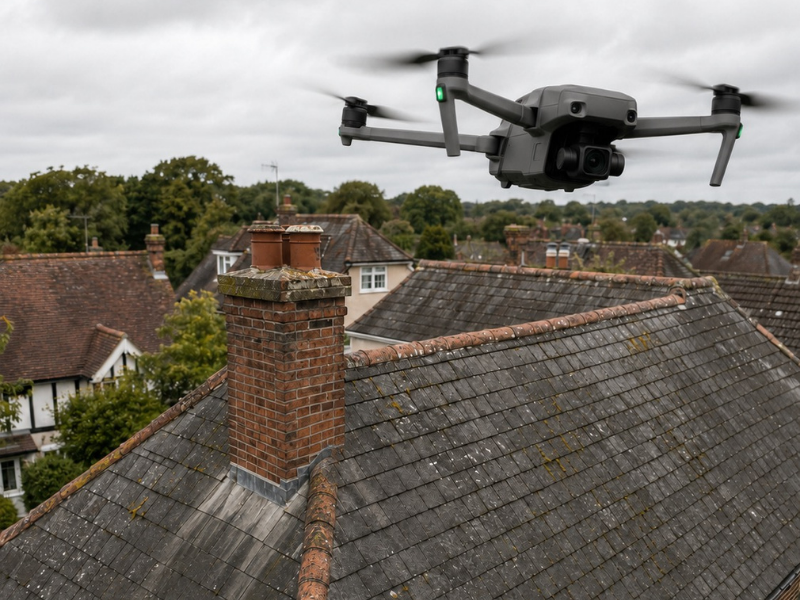
Drone inspecting a chimney stack and tiled roof
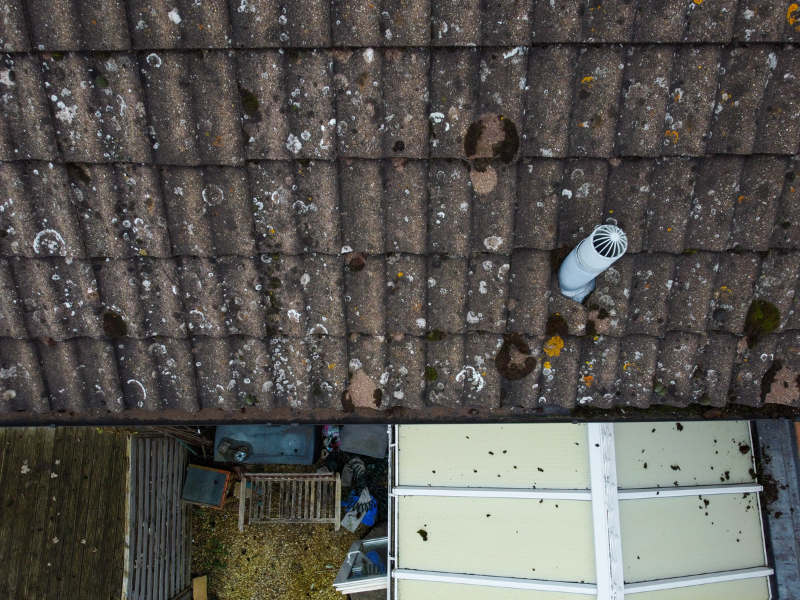
Aerial view of roof tiles and a roof vent during a drone inspection
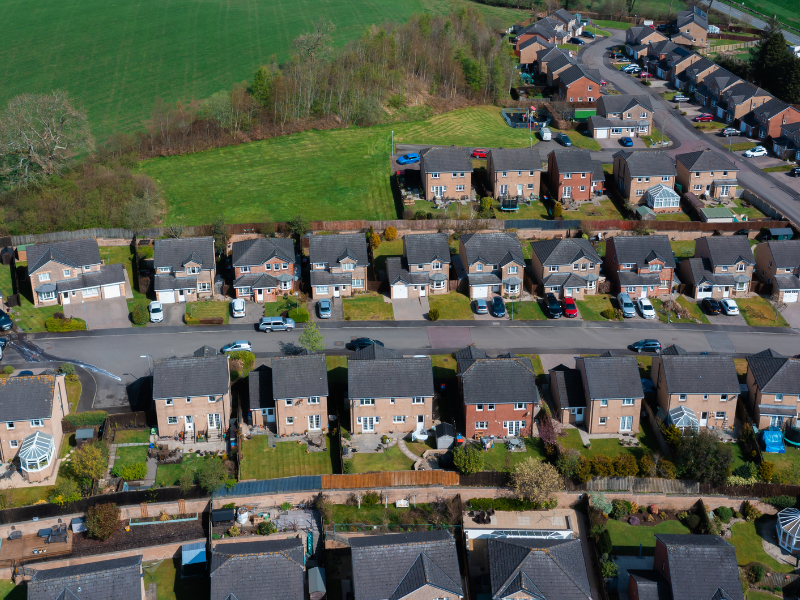
Aerial drone view of residential properties across Sussex covered by Damp Doctor Sussex

Drone Surveys in Action

A recent example of the investigation of a property using our drone surveys
Drone inspecting a chimney stack and tiled roof
Aerial view of roof tiles and a roof vent during a drone inspection
Aerial drone view of residential properties across Sussex covered by Damp Doctor Sussex

Drone Surveys in Action

A recent example of the investigation of a property using our drone surveys
Drone inspecting a chimney stack and tiled roof
Aerial view of roof tiles and a roof vent during a drone inspection
Aerial drone view of residential properties across Sussex covered by Damp Doctor Sussex
Drone flying during an aerial property inspection

Why Choose Damp Doctor Sussex for a Drone Survey?

  • Drone surveys can reduce the need for immediate scaffolding or high-level access simply to obtain an initial view.
  • The aerial findings can be considered alongside internal damp symptoms rather than being treated in isolation.
  • Customers receive clear explanations of visible defects and practical recommendations for the next step.
  • Damp Doctor Sussex can investigate the likely cause and carry out appropriate remedial work within the agreed scope.

Frequently Asked Questions

What is a drone roof survey?2026-09-03T14:13:15+01:00

A drone roof survey uses aerial photography or video to inspect roofs, chimneys, guttering and other high-level areas that may be difficult to view clearly from the ground. The imagery can reveal visible defects and provide useful evidence without immediately requiring scaffolding or roof access.

What can a drone roof survey inspect?2026-09-03T14:13:39+01:00

Subject to suitable flying conditions, a drone may be used to inspect roof tiles or slates, flat roof coverings, ridges, valleys, verges, lead flashing, chimney stacks, parapets, guttering, roof junctions and high external walls. It is a visual inspection, so concealed defects may require further investigation.

Can a drone survey find the cause of damp?2026-09-03T14:14:13+01:00

A drone survey can help identify visible external defects that may be contributing to penetrating damp or rainwater ingress. The aerial imagery should be considered alongside internal staining, moisture patterns and other inspection findings. A photograph of an external defect alone may not confirm the complete cause.

Is scaffolding needed for a drone roof survey?2026-09-03T14:14:33+01:00

Scaffolding is not normally required for the initial drone inspection. This can make it easier to obtain a detailed view of high-level areas before arranging more extensive access. Scaffolding, ladders or other equipment may still be required if a defect needs physical examination or repair.

Is a drone survey a replacement for a physical roof inspection?2026-09-03T14:14:51+01:00

No. A drone survey provides detailed visual evidence, but it cannot lift roof coverings, test fixings or inspect concealed construction. If the imagery identifies a possible defect, closer physical access or targeted opening-up may still be recommended.

Can a drone survey always go ahead?2026-09-03T14:15:06+01:00

No. A flight depends on suitable weather, visibility, airspace, surrounding people and property, and a safe area for operating the drone. The property and site conditions should be checked before flying. If conditions are unsuitable, the survey may need to be rearranged or an alternative inspection method considered.

What happens after a drone roof survey?2026-09-03T14:15:26+01:00

The photographs or video are reviewed for visible defects affecting the roof, chimney, guttering or other high-level areas. Where the survey forms part of a damp investigation, the aerial findings are compared with the symptoms inside the property. Damp Doctor Sussex then explains the findings and recommends an appropriate next step.

Can drone surveys be used for flats and commercial properties?2026-09-03T14:15:39+01:00

Yes. Drone surveys may be suitable for houses, flats, residential blocks, commercial buildings and older properties with difficult-to-reach roofs or elevations. Suitability depends on the building, location, surrounding area, access and flight conditions.

What customers say

Trusted by Homeowners Across Sussex

Tell Us What You Have Noticed

Share the relevant details and Damp Doctor Sussex will contact you about the next step.

Preferred Contact Method
Go to Top